

RoofShield
We Don't Just Coat Your Roof — We Make It Monolithic. No Gaps. No Seams. Waterproofs and Hurricane Proofs Your Roof Permanently!
Weatherproof your existing roof and stop roof leaks for 60–70% less than a full roof replacement. When installed as the complete layered Roof Shield System, it is guaranteed.
🏅MIAMI DADE COUNTY TAS-106 CERTIFIED UPLIFTED TESTED COATING
Overview
RoofShield (RP3) — used within The Original Liquid Applied Rubber Roof Shield System — is fundamentally different from any roof coating on the market, because it is not just a coating. It is used within a multi-layer system that combines several of RoofProtect's proprietary products to physically fill every void, gap, and space between your tiles: under the overlaps, in the grout joints, between barrel tile ribs, in every penetration point. Before treatment, your tile roof has hundreds of open spaces that wind and rain can enter. After the Roof Shield System is installed, those spaces are gone — sealed solid.
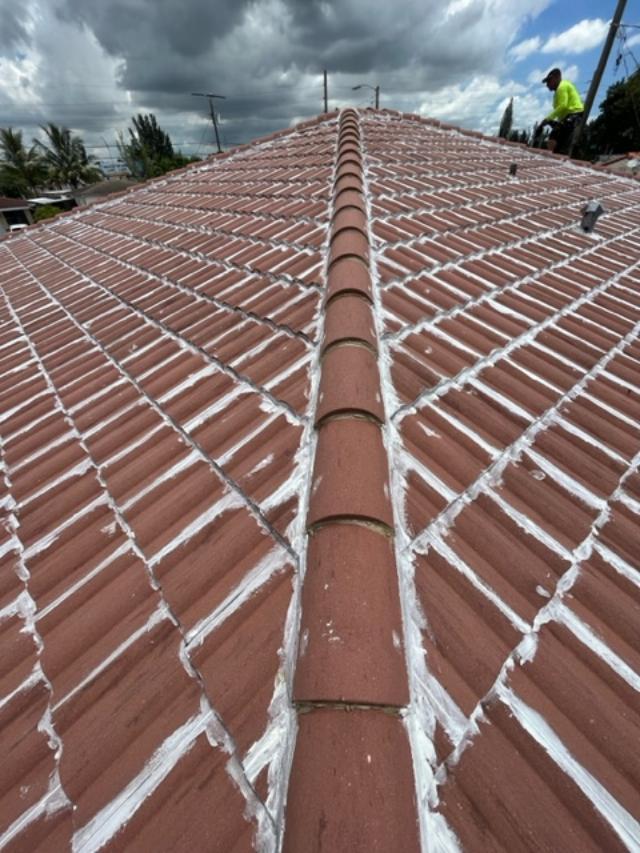
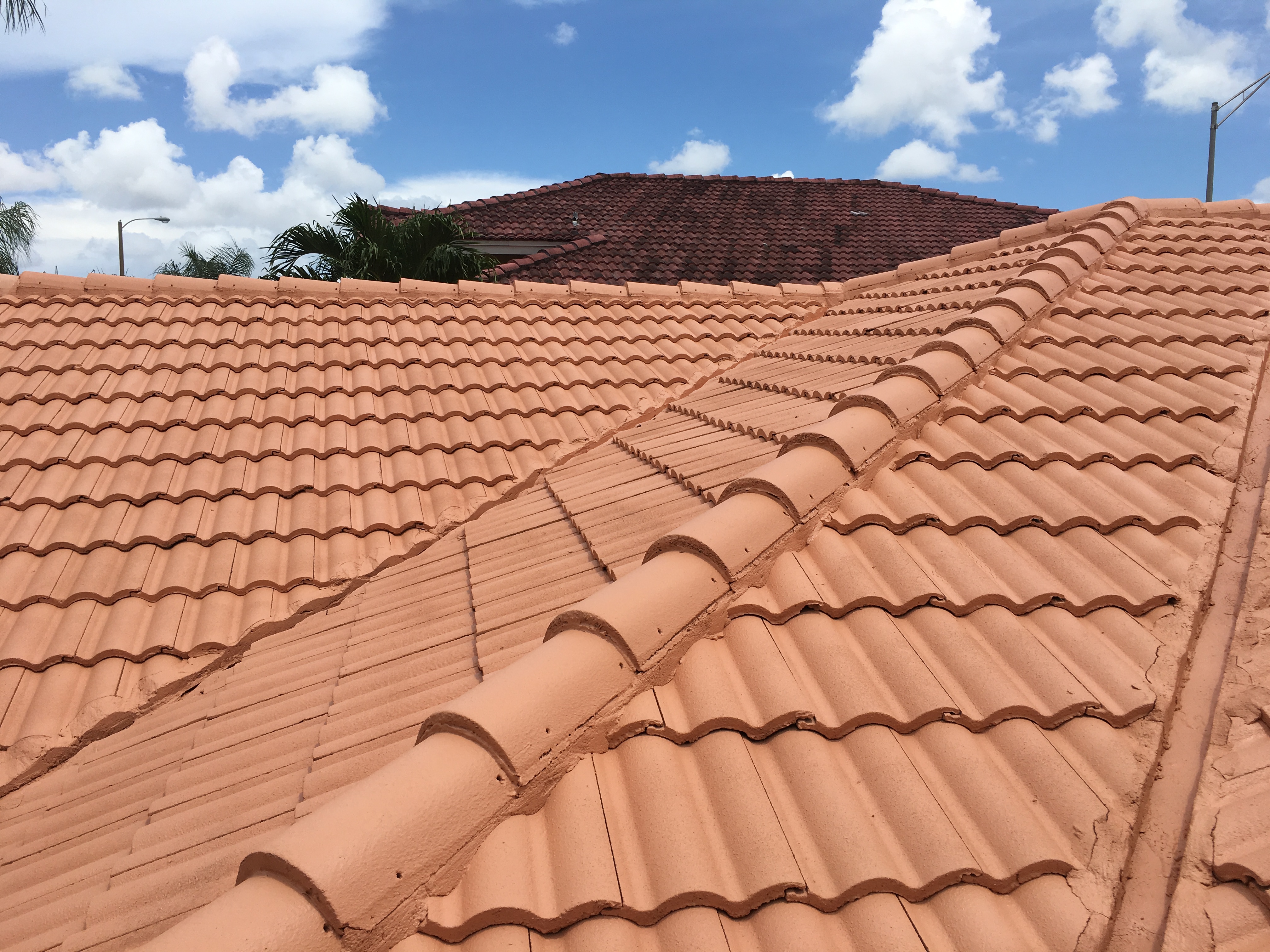
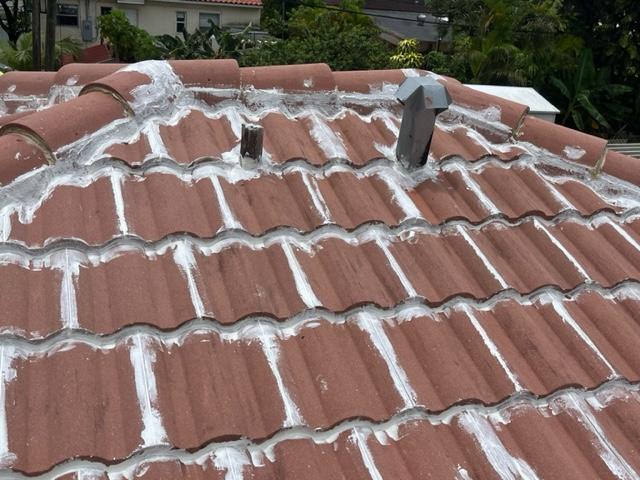
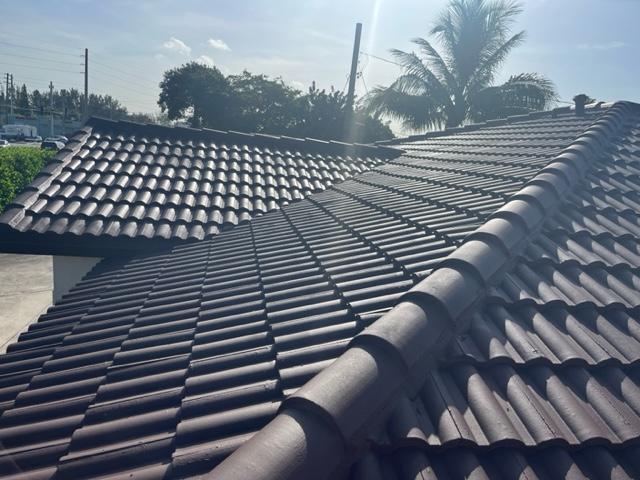
The Roof Shield, Smart Shield, and Fungal Shield systems are built from elastomeric, polyurethane, or silicone base ingredients depending on a customer's goals and price point. RoofShield specifically is usually formulated around a proprietary premium silicone base ingredient to achieve its monolithic barrier — which is what makes it suitable for every roof type, including flat roofs that hold standing water. The result is a monolithic roof: instead of hundreds of individual tiles sitting on mortar and clips — each one a potential wind or water entry point — the entire roof surface becomes one continuous sealed structure. Wind cannot lift individual tiles because they are bonded into a single unit. Rain cannot penetrate between tiles because there are no gaps left to enter — the Roof Shield System stops roof leaks. Before and after photos of the process show the dramatic difference: tile voids that were once open to the sky are completely filled and sealed.
This multi-layer monolithic system is the reason the Roof Shield System is the only liquid roof coating system ever to pass the independent Dade County Certified TAS-106 Uplift Pull Test — 5× the wind uplift strength of a new tile roof, at approximately half the replacement cost, with written warranty coverage.
The Roof Shield System is the professional descendant of the tile-securing technique roof painters discovered decades ago — refined, warrantied, and engineered specifically to fill every gap between tiles rather than just coat the surface. When completed, it is a seamless coating system — one continuous membrane over the entire roof, with no joints, no seams, and no weak points.
This is also why the Roof Shield System changes the conversation about tile roof leaks. In a traditional tile roof, the tiles shed water while a paper or synthetic underlayment beneath them does the real waterproofing — and when that underlayment tears, the standard industry answer is an invasive 'tile lift-and-reset': removing tiles, replacing the paper, and resetting the tiles, a disturbance that frequently creates new cracked tiles and new leaks unless you're committed to a full tile replacement project. The Roof Shield System takes a fundamentally different path: because the completed system seals the entire roof surface into one seamless waterproof membrane above the tiles, the roof no longer depends on the aging underlayment as its only water barrier. On a structurally sound roof — after every cracked tile and defect is repaired as part of the process — RP3 is far superior to any traditional roof material application, including synthetics: it is the answer that avoids tearing your roof apart to fix what's under it.
Like every system we manufacture, RoofShield is designed to extend the roof you already have — see how long roof coatings last in Florida and what that means compared to replacement.
Technical Specifications
Before & After
Each pair shows the same roof section — before the system fills the tile gaps, and after the monolithic seal is complete.
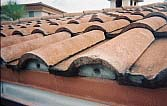
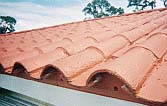
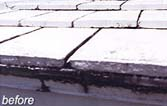
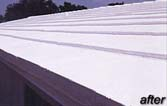
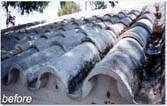
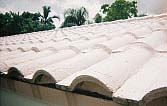
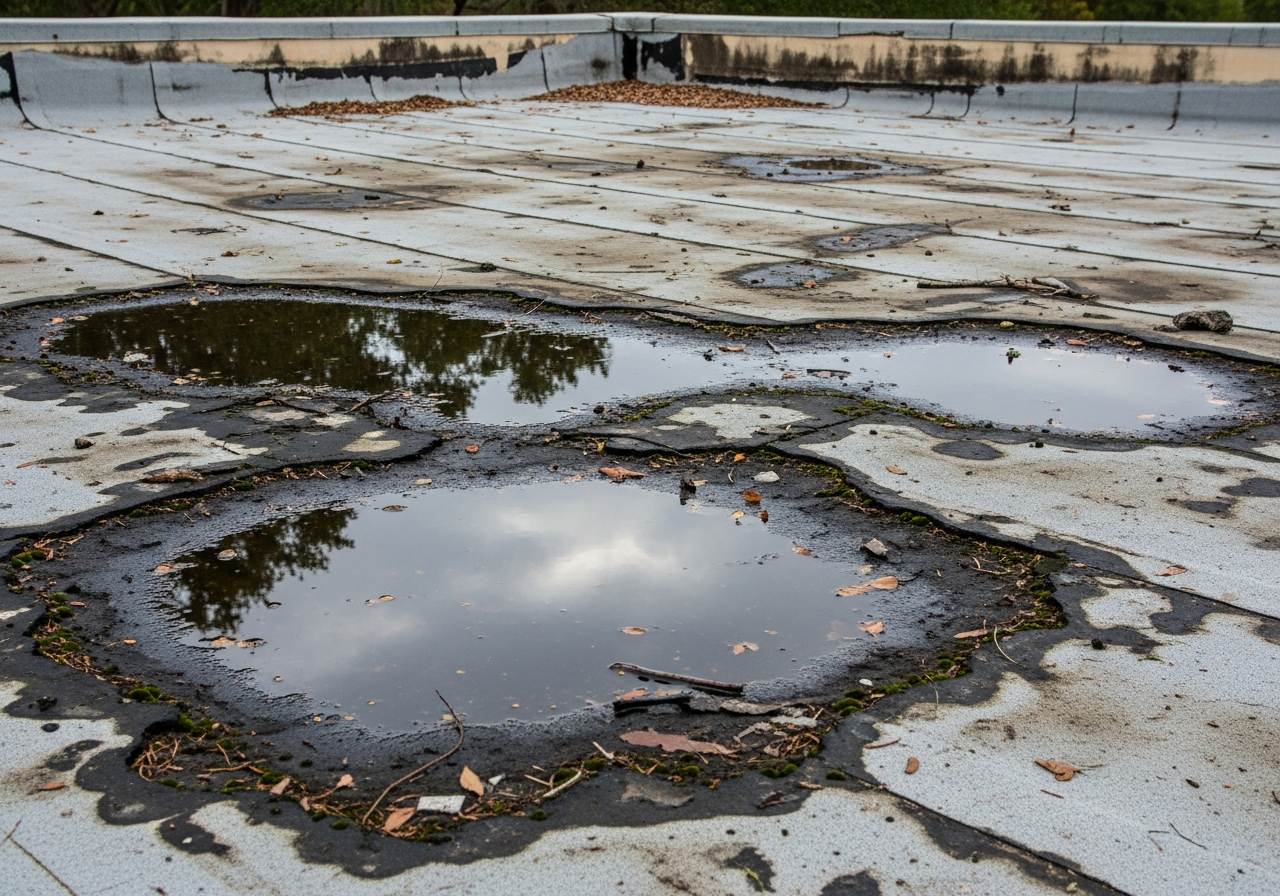
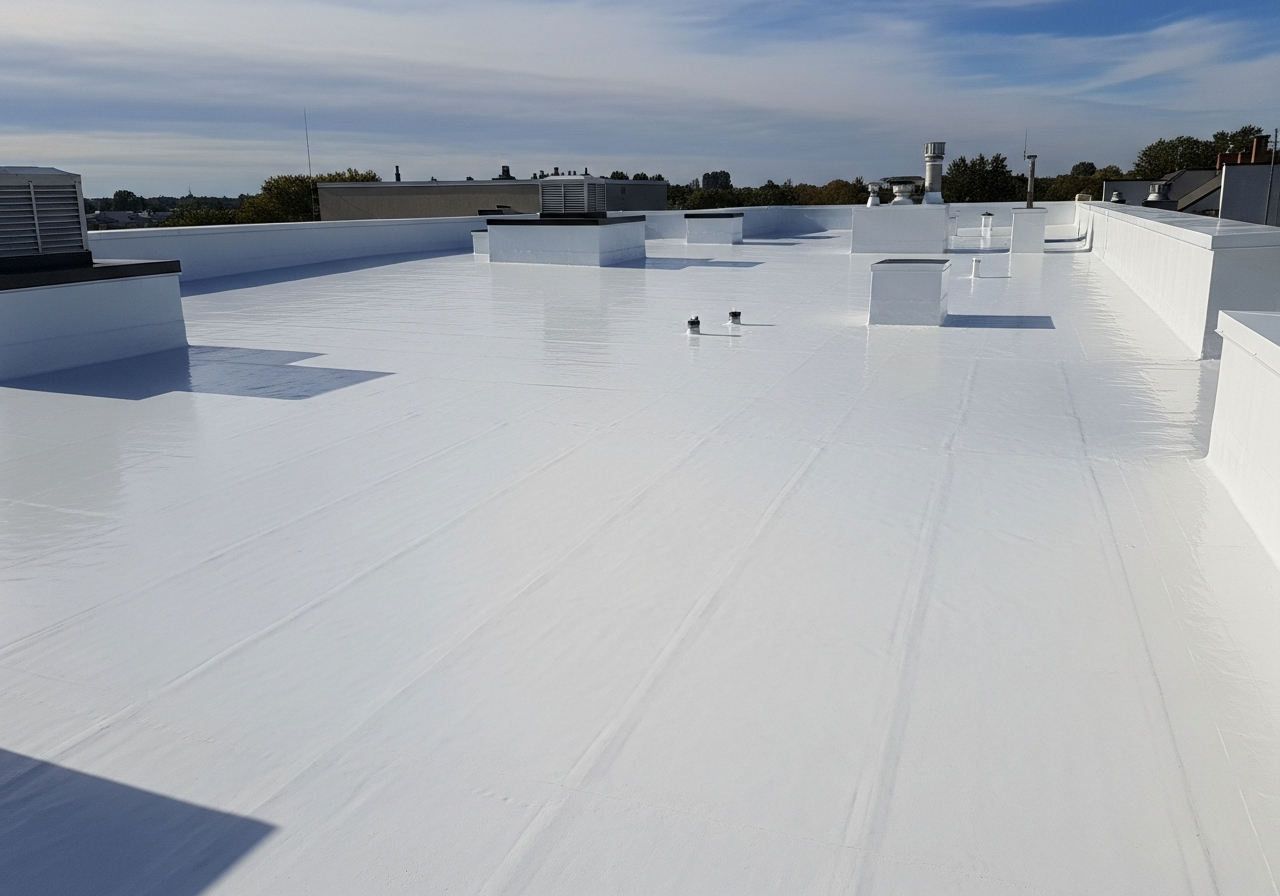
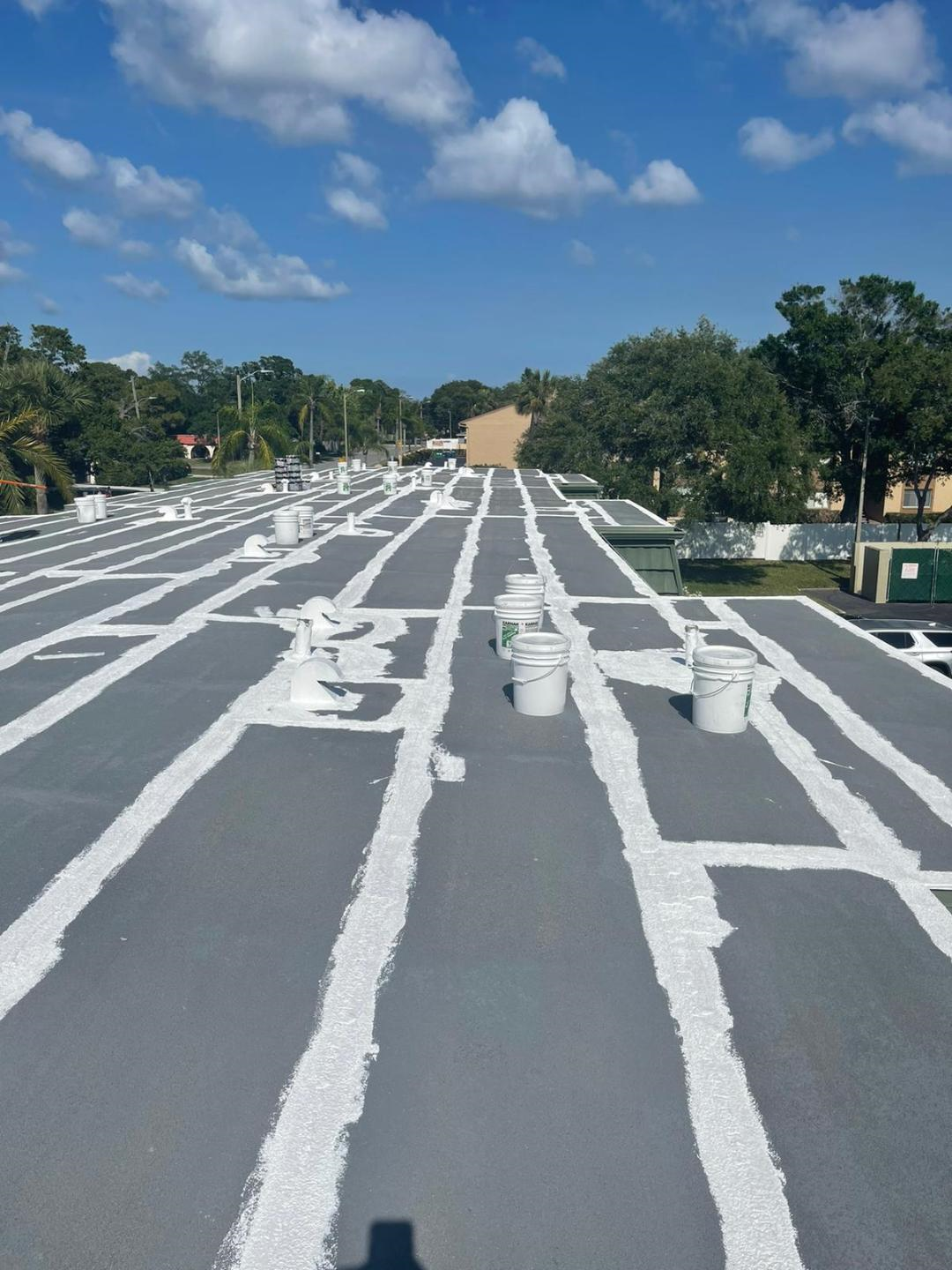
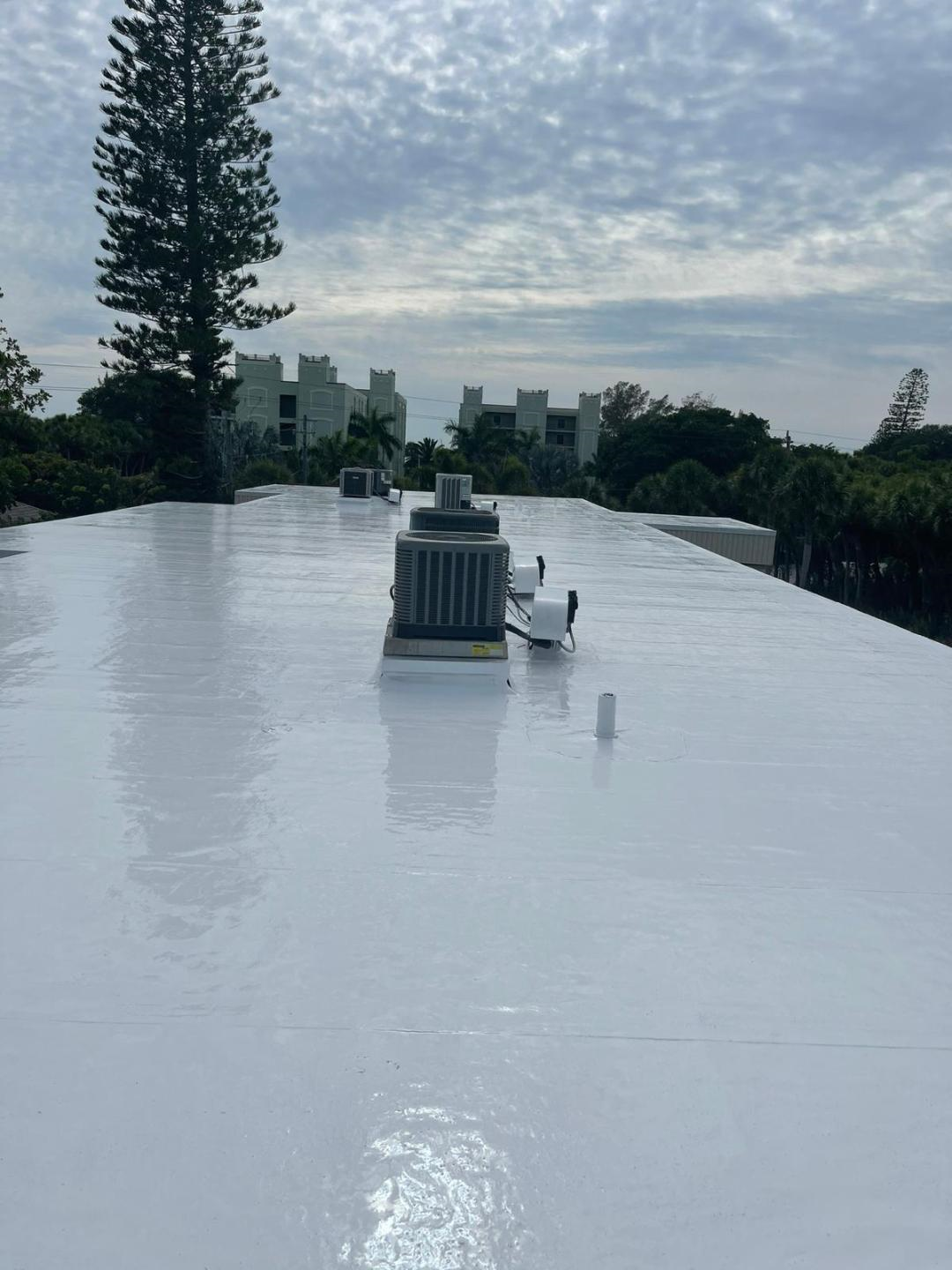
Every RoofShield installation begins with professional pressure cleaning and surface preparation — explore our full range of roof coating and restoration services.
Go Deeper
Every claim on this page has a full page of proof behind it. Click any topic to read the complete story.
What the Dade County Certified test is, and how RoofShield passed it.
What 'passing' means in real numbers — and our 100-lbf no-movement result.
How filling every tile gap turns hundreds of loose tiles into one continuous shell.
The uplift-strength comparison behind the 5× claim.
How a coated, well-maintained roof holds up at insurance inspection time.
Where roof painting came from — and how it evolved into this system.
Why the silicone base matters, especially for flat roofs that hold water.
The full onsite inspection every Roof Shield System project starts with.
How the Roof Shield System compares to a tear-off — at roughly half the cost.
Getting a Florida roof storm-ready before the season hits.
Key Benefits
Applications
Full-Service Installation Pricing
Roof Shield System — Installed: $3.00–$4.75 per sq ft
Fully weatherproofing an aging tile roof in Florida with the Roof Shield System costs $3.00 to $4.75 per square foot installed — it stops roof leaks and is the only system with Dade County TAS-106 hurricane wind-uplift certification.
Installed pricing includes labor and materials. Buying materials only? RoofShield factory-direct prices are shown in the product purchase options — a separate, materials-only rate.
Frequently Asked Questions
What does 'monolithic roof' actually mean?
A monolithic roof is one continuous sealed structure — instead of hundreds of individual tiles with gaps between them. The Roof Shield System fills every void and space between your tiles with multiple layers of product. After installation, your tile roof behaves as a single unit: wind cannot get under individual tiles to lift them, and rain cannot penetrate through the spaces between tiles because those spaces no longer exist. Before/after photos of the process make this immediately clear.
What is RoofShield actually made of — rubber or silicone?
RoofShield is used within The Original Liquid Applied Rubber Roof Shield System. The specific base ingredient RoofProtect typically formulates it with is a proprietary premium silicone blend, chosen because it performs on every roof type, including flat roofs that hold standing water. Our systems can also interchange elastomeric or polyurethane base ingredients depending on a project's goals and price point.
How many products are used in the Roof Shield System?
The Roof Shield System uses several of RoofProtect's proprietary products applied in sequence. Each layer serves a specific function — penetrating seal, gap fill, bonding membrane, and protective topcoat — working together to create the final monolithic structure. This is why you cannot replicate the result with a single off-the-shelf product.
I have a tile roof leak — do I need a 'tile lift-and-reset' underlayment repair?
Often, no — and that is exactly what makes the Roof Shield System different. Understand what a 'lift-and-reset' really is: re-roofing by another name. The tiles come off, new material goes underneath, and the tiles go back on — that is a partial re-roof, marketed as a 'repair.' Don't re-roof when you don't have to. In a traditional tile roof, water passes between the tiles onto underlayment paper below, and when that paper tears, the industry's answer is to start taking your roof apart. It's invasive, and it commonly creates new broken tiles and new leaks unless you're committed to a full tile replacement. The Roof Shield System eliminates the need for that in most structurally sound roofs: our liquid rubber flows into and fills every gap between the tiles, and when completed the roof is one seamless coating system — a continuous waterproof membrane above the tiles, so the roof no longer relies on the old underlayment as its only water barrier. Understand what this retrofit really does: on a conventional roof, the tiles are there for architectural character and looks, with some overlapping protection for the paper layer underneath them — it is that paper, not the tiles, doing the real waterproofing. The Roof Shield System interlocks those tiles into a solid cement-and-clay top — one continuous shell — so wind and water shed across the surface with no spaces between the tiles for either to exploit. And the roof still looks nearly the same as it did before the system was applied: same Spanish tile character from the street, fundamentally different roof underneath. Every job starts with an inspection and repair of cracked tiles and defects before coating. The one exception — discovered while undertaking our full onsite Manufacturer's Inspection Report (RoofShield (RP3) requires this comprehensive, detailed report; other services receive an onsite evaluation, not the full report): any rotten or soft wood underneath the tile must be repaired first (tiles in that localized area are lifted, the bad piece of wood is removed and dried back in with traditional materials), and then the coating system proceeds over the sound roof. As our Manufacturer's Inspection Report states: 'The Manufacturer's Inspection is not intended to provide structural integrity advice. The purpose of this review of your roof is to confirm stable surfaces of your flat roof or roof tiles; that the flat deck or tile attachments are secure; to identify the presence of any chips or cracks; that flat deck tie-ins, seams, and edges are secure; and that all returns, eaves, and soffits are free of rot from moisture and water intrusion. Any insulation or wood that may be soft or wet — and dangerous to walk on — must be repaired prior to the application of roof coatings. The main purpose of this inspection is the future successful application of our products, which require the roof surfaces to be traversed to apply protective coatings. You may be alerted to rework areas or other concerns that should be addressed. The owner is ultimately responsible for any repairs or rework indicated prior to application (unless otherwise specified and included depending on scope) of our roof coatings and/or roof maintenance systems, which may be at an additional cost above the standard application costs for the installation of our products.' RP3 is far superior to any traditional roof material application, including synthetic underlayments — it is the answer, not the patch. And among roof coating systems, RP3 is more applicable to this problem than any other, period: it is the only one engineered as a monolithic system — and the only one to pass the Dade County Certified TAS-106 Uplift Test as a system, not just a surface coat.
Does The Roof Store sell synthetic roofing underlayment?
No. The Roof Store and RoofProtect Products have never manufactured or sold synthetic roofing underlayment — our approach makes it unnecessary. The Roof Shield System seals the entire roof surface into one seamless monolithic membrane, so the roof no longer depends on underlayment paper as its water barrier at all. Any 'synthetic roofing underlayment' advertised under a similar name is not our product and is not affiliated with The Roof Store of Davie, FL (theroofstore.net).
What makes RoofShield different from any other roof coating?
Most roof coatings go over the surface of tiles — they do not fill the spaces between them. RoofShield is used within the Roof Shield System to fill the voids, gaps, and overlaps between tiles, transforming a collection of individual pieces into one sealed roof structure. That's why it is the world's only liquid coating to pass the Dade County Certified TAS-106 Uplift Pull Test — because no other product has achieved what RoofShield does structurally.
How does 5× stronger than a new roof actually work?
A new tile roof passes TAS-106 at approximately 35–55 lbs of uplift force. RoofShield-treated roofs pull-test at 5× those values because the tiles are no longer individual pieces — they are bonded into a monolithic structure. Wind uplift force that would displace a single tile has no effect when that tile is mechanically fused to every tile around it and to the substrate beneath.
What warranty coverage is available?
All products are warrantied. Ask us for the written coverage terms for your selected product or professionally installed Roof Shield System.
Will this qualify my old roof for insurance continuation?
Yes — by being proactive. Under Florida law, homeowners have the legal right to request an independent Useful Life Exam on their roof. It is the report from that licensed inspector — not any product or contractor — that the insurance company recognizes for coverage continuation. What RoofShield does is put your roof in its best possible condition before that exam: sealed, waterproofed, and demonstrably well-maintained. When the inspector arrives, a roof in good condition gives the insurer very little to work with beyond the age of the roof alone.
How much cheaper is this than replacing my roof?
The Roof Shield System typically costs 60–70% less than a full tile roof replacement — while delivering 5× the wind uplift resistance and a monolithic structure no new roof can match. Most residential projects save $20,000–$80,000. Free Estimates.
Get Your Installation Estimate
Free Estimates.
Ready to Protect Your Roof?
Not sure this is the right product for your roof? Call us before you buy — we make it, so we know.
Ask Before You Buy — 954-210-9614